Organisation01
The Sublime Society of Beefsteaks
An exclusive dining society founded in 1735 in Covent Garden whose rituals, uniform and weekly steak dinner defined its identity and social cachet.
August 28, 2026
Feasts & diningA West End theatre, a strict 24‑seat rule, bright blue coats with gridirons and the same steaming rump steak every week. Meet the Sublime Society of Beefsteaks, an 18th century dining club where theatre men, noblemen and even the Prince of Wales rubbed elbows over steak, port and toasted cheese sandwiches.
The story
The Sublime Society of Beefsteaks began in 1735 in London’s West End, gathering initially at the Covent Garden Theatre. It grew out of a theatrical circle that included actors, painters and satirists and soon admitted noblemen, statesmen and royalty. From the outset the society cultivated ritual: a strict twenty four seats, a distinctive blue coat and waistcoat with brass buttons bearing a gridiron motif and a weekly menu built around a thick rump steak, braised onions, baked potato, port and, curiously, toasted cheese sandwiches as a second course. Meetings were held every Saturday between November and June. The club survived disasters and moves, notably the 1808 blaze that destroyed the Covent Garden Theatre and killed about twenty people, and later the Lyceum’s own fire, but it also benefited from patrons and public support during rebuilds. The Prince of Wales, later King George IV, was placed on a waiting list and joined after the society’s customs were respected. By the mid 19th century changing social habits, the spread of rail travel and Victorian sensibilities eroded the Beefsteaks’ appeal. Attendance dwindled and the original society ended after more than a century, its last lonely supper occurring in the 1860s. Yet the name and rituals proved resilient: there were at least three documented revival attempts, and a notable reinvention in 1966 that continues to meet, wearing modern interpretations of the old uniform and preserving artifacts such as the original president’s chair returned by Queen Elizabeth II. Across its life the society attracted writers, politicians, actors and public figures; the episode traces its theatrical origins, extravagant ritual, brushes with catastrophe and slow decline, and explains how a love of beef, wine and conviviality became a durable piece of London social history.
The cast and setting
Meet the people, places and peculiar details at the centre of this episode.
An exclusive dining society founded in 1735 in Covent Garden whose rituals, uniform and weekly steak dinner defined its identity and social cachet.
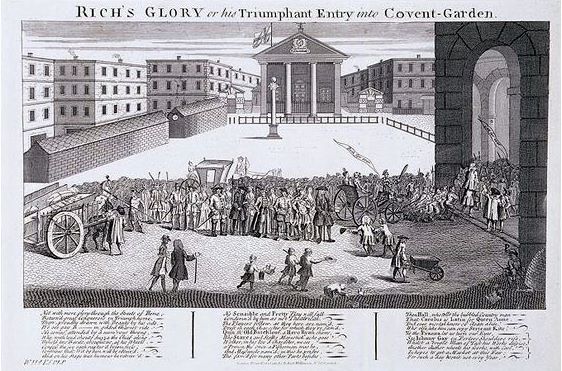
Actor, pantomimist and manager of the Covent Garden Theatre who is listed as one of the society’s first two founding members and figured in origin stories of the club.
A theatre landscape painter named as one of the society’s first two founding members and credited in one origin account with grilling steaks behind the stage.
Famous satirist who appears in origin stories as part of the theatrical circle that gave rise to the formal Steak Lunch Club in 1735.
The society’s historian and the solitary figure depicted at the club’s final supper in the 1860s, quoted on membership lists and origins in the episode.
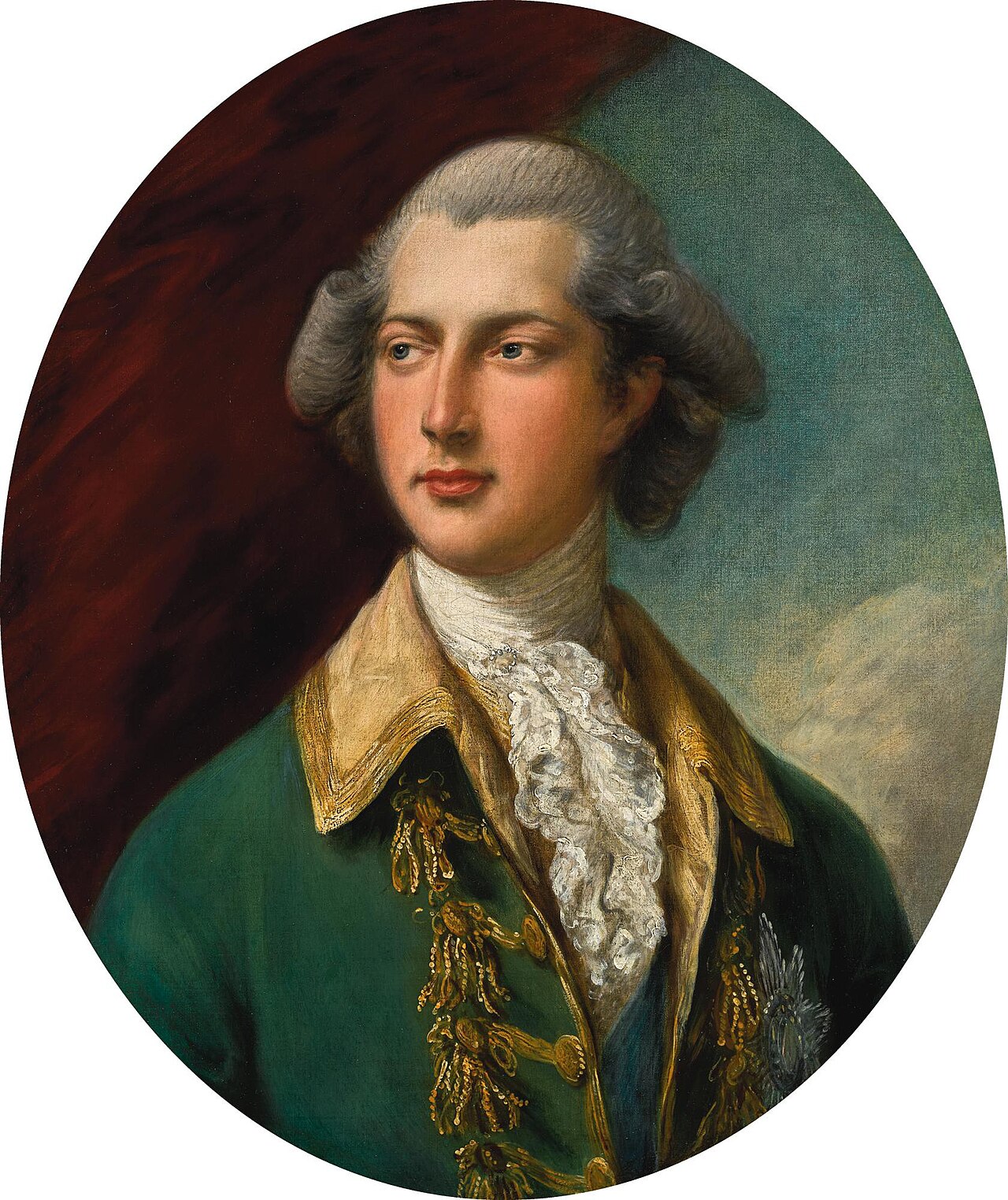
A royal figure who waited to be admitted under the society’s twenty four‑seat rule and later joined, illustrating the club’s reach into high society.
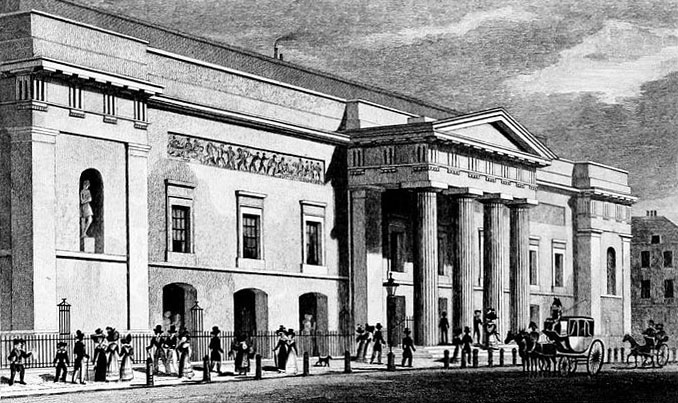
The West End theatre where the Beefsteaks were born and where they met for seventy three years until the disastrous fire of 1808.
A later meeting place for the society and the location of the lonely final dinners in the 1860s; it was rebuilt with a dining room to accommodate the Beefsteaks.
A temporary meeting venue the society used after the Covent Garden fire and during other periods of displacement.
An actor who led an earlier 1705 beefsteak club, demonstrating that the Beefsteak idea predated the Sublime Society's 1735 founding.
A politically radical beefsteak‑based group that met in 1733–1734 and is often conflated with the later Sublime Society in historical accounts.
Monarch who returned the original society’s president’s chair to the modern reinvention of the club, linking the 18th‑century society to its 20th‑century revival.
From the archive
At a glance
The Sublime Society of Beefsteaks was founded in 1735 in London’s West End and originally met at the Covent Garden Theatre.
Early members were predominantly actors, artists, writers and musicians drawn from the theatre community; later seats were filled by noblemen, statesmen, soldiers and royalty.
The society enforced a strict limit of twenty four seats for its dinners.
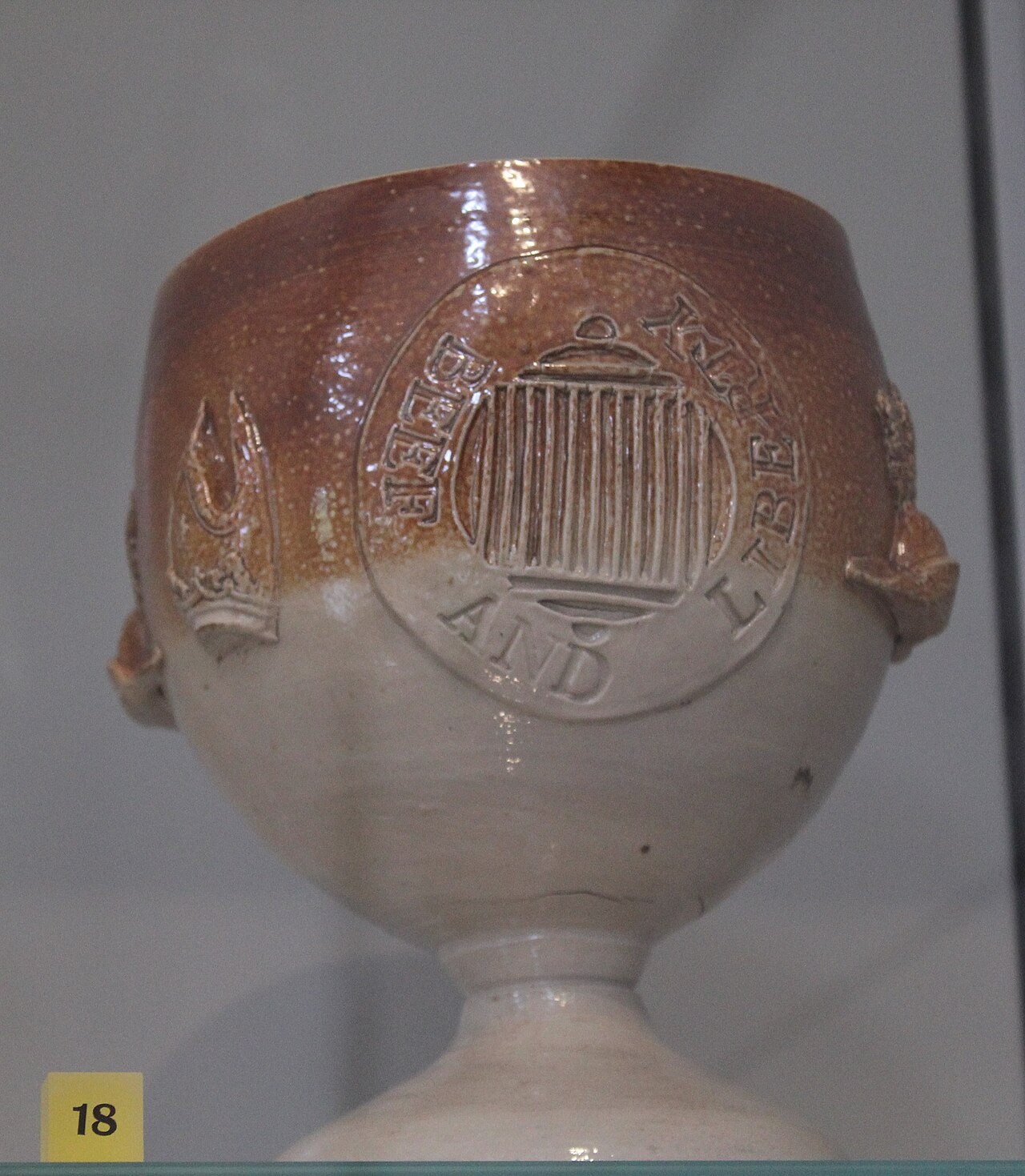
Members wore a distinctive uniform: a bright blue coat and waistcoat with shiny brass buttons displaying a gridiron motif and the words Beef and Liberty on the buttons.
Meetings took place every Saturday between November and June.
The fixed weekly meal was thick cut rump steak on hot pewter plates with braised onions and baked potatoes, followed by toasted cheese sandwiches and fortified port wine.
For seventy three years the society met at Covent Garden until a catastrophic fire on 20 September 1808 destroyed the theatre and its collections and killed around twenty people when the roof collapsed during rescue attempts, after which meetings moved temporarily to the Bedford Coffee House and later to the Lyceum Theatre for many years thereafter.
For as long as humans have walked the earth, there has been one universal truth that seemingly has never changed. Men, like moths, are drawn to open flames, and when those flames have a large piece of meat roasting above them. Well, it's about as close to heaven as many men can get, so it's perhaps no surprise, then, that in Georgian London, a particular group of men took this age old instinct one step further, replete in their custom made uniforms decorated with gridirons. These men would spend hours eating and then composing hearty songs about beef. Well, they took their society so seriously that they even appointed their own bishop. And when the Prince of Wales told them that he'd like to join their club, they simply told him they had a strict twenty four seat policy and all twenty four seats were already full. Well, this, as the title of the episode would have already given away, was none other than the sublime society of Beefsteaks. These are the bizarre but true stories from history that in some way involve food. I'm Nick Charlie Key and this is the fantastic history of food. A special thank you to all of my Patreon supporters. You are the driving force behind this show getting made. So if you're loving the show and you want to know how you can start supporting it and helping me to keep putting out episodes, the very best way to do that is by signing up to support the show monthly over on my Patreon, You can sign up for as little as two bucks a month, and you'll get your name forever etched into the Wall of Fame over on our website, as well as a personalized shout out by name on an upcoming episode. And for just five bucks a month, you'll get ad free early access to episodes. And on top of that, you can start sending in your own strange but true food history facts. And I'll read them out on the show. Or better yet, record yourself telling us all your fact, and I'll feature it in our listener section at the start of an episode. But right now, on with the show. We open our scene today in a gothic dining room at the Lyceum Theatre in London. The year is eighteen sixty six, and in the middle of the room stands a large wooden table, ornately arranged with place settings for roughly ten to twelve guests. On the wall surrounding the table hang weathered and fading portraits of men who at one time held this room to be the absolute pinnacle of London's high society. High in the rafters hang the very same gridirons that have loomed over the dining table for generations. A waiter appears from a side room, carrying with him a large plate on which rests a sizzling steak. Trailing steam behind it as it is ceremoniously escorted to the table. Well, it is deftly placed in front of the man who now sits at the head of this very table. He nods his thanks to the waiter and raises his glass to the room, acknowledging the formal beginning of the society's sacred ritual. But there are no glasses raised to match his own, because Walter Arnold, the man who now holds his glass aloft and in front of whom the steak continues to bellow steam, sits alone in the dining room, and not for the first time this year has he sat in solitude in this very room, reminiscing about the society's past glories. In fact, of the last fourteen scheduled meetings, on seven occasions he has been the only man to show up. And on the other seven, not even he was present in a room that at one time had men fighting one another to get in. In fact, if we rewind over a hundred years into the past, we'll see that the Prince of Wales, who would go on to become King George the Fourth, was placed onto a waiting list until one of the highly coveted and strictly enforced twenty four seats became available. So what happened? How did the society fall so far in such a short space of time? Well, let's rewind a bit further still and see just how this members only club first got its start. The sublime society of Beefsteaks was, in actual fact, not the first group to build its identity around their shared love of steak. In seventeen oh five, an earlier beefsteak club had been started by the renowned actor Richard Estcourt and some of his friends in the world of art and politics. They had originally been a part of a different high society club known as the Whiggish Kit-cat Club, but they broke away to form their own club under the motto proving that substantial beef was as prolific a food for an English wit as any pie or custard. It was then followed by a politically radical group who were not discussing their political ideologies, would gather to partake in some delicious steak. This group was known as the Rump Steak or Liberty Club, but this one lasted just a single year, from seventeen thirty three until seventeen thirty four, and was perhaps a precursor model to the men who would start the sublime Society of Beefsteaks. And owing to their historical proximity, they are often mashed into one entity, confusingly mixing up their member lists and traditions. But in seventeen thirty five, the Sublime Society officially launched in London's West End. Centered as it was around the Covent Garden Theatre. At the start of my research into this episode, I must admit I did not expect to have to wade through a multitude of these beef based fraternities in order that I would need to clarify just which one of them I was specifically referring to. But here we are at the birthplace of what was to become one of London's hottest social clubs. Now, as history is wont to do, there are in fact a few competing origin stories for just how exactly this club first came about. One of the stories centres itself around a man named John Rich, who was at the time a rather well-known actor and pantomimist, as well as being the manager of the Covent Garden Theatre, in which the club would first begin meeting. As this story goes, John Rich supposedly cooked a steak for the visiting Earl of Peterborough, who enjoyed it so much that he suggested coming back the very next week to have Rich cook for him again. Then there is another version which tells of how one of the theatre's landscape painters and scenery artists, a man by the name of George Lambert, began grilling steaks on a makeshift stove behind the stage. All because he was far too busy painting the theatre's backdrops to have time to leave and buy himself a proper meal. The third version of the story, and quite possibly the safest of the options at our disposal, is simply that John Rich, George Lambert and another famous satirist by the name of William Hogarth, were already meeting together on a semi-regular basis as friends. And out of this informal tradition, the formalized Steak Lunch Club was born in seventeen thirty five. Whichever of these stories tells the exact correct origin of the club, what we do know for sure, according to the club's historian Walter Arnold, is that Rich and Lambert were listed as the first two of the society's twenty four founding members. From the outset, they were adamant about elevating the status of their group and tried their hardest to avoid using the term club, preferring the term society well. Common use language always wins in the end, and soon most of its own members simply referred to it as the Beefsteak Club. We're going to take a short break, but when we return, we're going to find out more about the rise and subsequent fall of this most sublime society, and just how it might not be fully dead just yet. In its earliest iteration, its first twenty four members consisted mainly of actors, artists, writers and musicians, which should come as no surprise, seeing as that it started inside a celebrated West End theatre. Soon, however, as seats around the table became available, these theatre men were soon being joined by noblemen, statesmen, famous soldiers and even royalty. Fifty years after the club's inception, the aforementioned Prince of Wales joined and, after waiting his turn appropriately, was soon followed by his brothers, the Dukes of Clarence and Sussex. Society meetings were held every Saturday between November and June, and on meeting days you were not allowed to enter unless you were addressed appropriately in the society's prescribed uniform. This consisted of a bright blue coat and waistcoat, both adorned with shiny brass buttons. On the buttons themselves was a gridiron motif, and the words Beef and liberty meetings began in a formal manner. As the men entered, they greeted one another and took one of the strictly maintained twenty four seats around the table. Once all of the men were seated, waiters would appear holding trays precariously stacked with hot pewter plates. The plates would be placed before the assembled men with a flourish, and on each plate sat the same meal each and every week thick cut rump steak sizzling on the still hot plates, surrounded by braised onions and baked potatoes. Next to their plates sat the customary glasses of fortified port wine acquired from the nearby pub. The men would attack their plates heartily, swapping stories with a gentleman around them until every plate had been cleaned. And as a somewhat surprising palate cleanser, the chef would then bring out a second course that always and only consisted of toasted cheese sandwiches. Now, I'm going to pause here for a moment, just to revel in the glory of a meal that consists of a well cooked steak and a toasted cheese sandwich. Maybe we aren't so different from our ancestors after all. And really, we as humans can be terribly easy to please sometimes, can't we? After these toasted cheese sandwiches, the tablecloth was removed. The money was collected from all the men present by the chef himself, I might add, and out came even more wine with which to. While the night away. For seventy three years the society met like this in the Covent Garden Royal Theatre, until, on the twentieth of September, eighteen oh eight, a massive fire ripped through the historic building. The blaze started shortly after midnight and quickly turned into a catastrophe on multiple fronts. Owing to the late hour and the sudden nature of the fire, there was no time to save any of the priceless artifacts stored in the recesses of the theatre, and within just a few short hours, the fire had wiped out a vast collection of irreplaceable manuscripts, musical scores, and lavish costumes built up over decades of productions. And yet still, this was nothing in comparison to the tragic loss of life that occurred that night. Two when a reported twenty people, mostly firefighters and onlookers trying their best to get in and save what they could, were killed when the roof collapsed inwards right in the middle of the rescue efforts. The club members were devastated on multiple fronts and went to work, doing what they could to support the swift rebuilding of the theatre with the Prince of Wales even present at the laying of the new foundation slab. In the meantime, they had to move their weekly meetings to the nearby Bedford Coffee House until the following year, when they moved once more to the old Lyceum Theatre. Things ran smoothly again for another twenty two years, until what was now becoming a bit of a troubling pattern. The old Lyceum Theatre also burned down in eighteen thirty, whereupon the club moved back to the Bedford Coffee House for the next eight years until the old Lyceum Theatre reopened. During the rebuilding process, the theatre was especially designed to include a large dining room in order to accommodate the Beefsteak Club's weekly meetings, and this was perhaps one of the last great hurrahs of this venerable old institution. As within just a few short years, the membership numbers would slowly begin to dwindle until its final lonely supper that we opened the episode with in eighteen sixty seven. The club served its final steak to the solitary man, paying homage to a club that had survived for well over a century. The last twenty years of its story saw a slow decline, owing in part to the changing of British society and how its members spent their time. Many of them were no longer free on Saturdays as the social scene exploded in London. For many of them, wealthy as they were, the opening of the railway system meant that many of them could now pop out of town on the weekends to their country estates, without it being a long and arduous journey, planned for many months in advance. Society as a whole was changing too, and the hearty indulgences of the Georgian era were replaced by Victorian era sensibilities. Fashion, too, was moving rapidly, and the rituals and old fashioned uniforms no longer appealed to prospective new members. By the time it closed its doors, the once coveted and fought over twenty four seats at the table now sat glaringly empty as the club only had eighteen official members on their books. And yet this, too, was misleading, as the average attendance at the dinners had dwindled most weeks down to just two men. Despite the winding up of the original club, the legend of this group has refused to die. There have been at least three documented efforts to revive the society in various forms, the first coming just ten years later by the new owner of the Lyceum Theatre in an effort to drum up some publicity for himself. But perhaps the most successful reinvention of the club happened in nineteen sixty six, and was formed by a group who themselves could claim a familial lineage to someone in the original club's members role. They still meet to this day, in fact, and they wear modern interpretations of the original blue coat and buff uniform, along with a gridiron motif buttons. Queen Elizabeth II even donated back to them the original society's president's chair, which had come into royal possession sometime in the intervening years. Well, throughout the centuries, the club has played host to royalty, politicians, playwrights and artists. From the very king himself to the famous writer Evelyn Waugh, the philosopher A.C. Grayling to the Prime Minister, Harold Macmillan. Even contemporary celebrities like Richard Attenborough and Stephen Fry have attended the modern reinvention of the club, and I personally really love the thought of these old traditions tying us back to the past and fun and lighthearted ways. It reminds us that we're simply another in a long line of people who share the love of good food, good wine, and good company, and there's nothing stopping any of us from gathering a few friends together around an open flame, sharing life together as we listen to the sounds of a rump steak sizzling away in the background. This show is made entirely by me, Nick, Charlie Key, and if you like what you hear, why not check out my other show, The Wild History of War. It's just like this show, except it tells all of the wild and bizarre stories from a history of conflict that you never learned about in school. So don't forget, you can sign up to support the show on Patreon from as little as two bucks a month. And until next time, Bon appetit.
Questions answered
An exclusive dining society formed in 1735 in London that built its identity around a ritual weekly steak dinner, distinctive uniform and a strict complement of twenty four seats.
It began meeting at the Covent Garden Theatre in 1735, holding weekly Saturday dinners in the season between November and June; later meetings moved between Bedford Coffee House and the Lyceum Theatre after fires.
Membership began with actors, artists and writers from the theatre world and later expanded to include noblemen, statesmen, soldiers and royalty, though the society always limited itself to twenty four seats.
Each week they were served a thick rump steak with braised onions and baked potato on hot pewter plates, accompanied by fortified port and followed by toasted cheese sandwiches.
A combination of theatre fires and relocations, changing Victorian social tastes, the new mobility offered by railways and dwindling attendance led to its decline through the mid 19th century.
Yes; there were at least three documented revival attempts, with a notable re‑founding in 1966 that continues to meet and preserves some original traditions and artifacts.